FEIOSanatan
ScripturesBrowseMyths vs RealityHeritageLibrary

FEIO

Sanatan Dharma Digital Library

Preserving and sharing the eternal wisdom of Bharat. Vedas, Upanishads, Gita, Puranas, and thousands of sacred texts — free to read, free to download.

Explore

Sacred TextsBrowse LibraryMyths vs RealityHeritage SitesCommunity LibraryUpload a Text

Built By

Karan

Full-stack developer building things that matter.

kwen.in

© 2026 FEIO — Sanatan Dharma Digital Library

वसुधैव कुटुम्बकम् — The world is one family

Showing 20 of 477 results for “hindu architecture”

📿 Myths vs Reality

Heritage

What they say

Shah Jahan built the Taj Mahal as a monument to love.

The Truth

The Taj Mahal was originally a Hindu temple palace called Tejo Mahalaya. P.N. Oak's research and Badshahnama's own records show it was seized by Shah Jahan. The building has all five elements of Hindu temple architecture — pancha bhuta. The so-called 'Muslim graves' were added later.

Professor P.N. Oak documented that the Taj Mahal's architecture follows Hindu temple design — the central dome represents Akasha (space), the foundation represents Prithvi (earth), the garden Jala (water), the pillars Vayu (air), and the lamps Agni (fire). The Badshahnama (Shah Jahan's own court chronicle) admits the palace was 'taken from' Raja Jai Singh. Carbon dating of the wooden door yields dates older than Shah Jahan.

p n oakbadshahnamahindu architecture
History

What they say

Hindus are intolerant and violent against minorities.

The Truth

India has been the ONLY civilization that never invaded another country, never persecuted other religions, and gave refuge to Jews, Zoroastrians, Syrian Christians, and Tibetan Buddhists when they were persecuted everywhere else. The concept 'Vasudhaiva Kutumbakam' (world is one family) is uniquely Hindu.

आ नो भद्राः क्रतवो यन्तु विश्वतः

“Let noble thoughts come to us from every direction.”

— Rigveda 1.89.1

Jews fled to India 2000 years ago and were never persecuted. Zoroastrians (Parsis) fled Iran and found refuge in Gujarat. Syrian Christians arrived in Kerala in 52 CE. Dalai Lama and Tibetan Buddhists found home in Dharamsala. India has 300,000+ mosques — more than any Islamic country. The world's oldest churches and synagogues are in India.


vasudhaiva kutumbakamjews in indiaparsis in india
Temples and tenements

Temples and tenements

Deanna Petherbridge

Sangama

Sangama

Nalini Rao

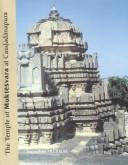
The temple of Muktēśvara at Cauḍadānapura

The temple of Muktēśvara at Cauḍadānapura

Vasundhara Filliozat

ॐTantrasamuccaya of Nārāyaṇa

Tantrasamuccaya of Nārāyaṇa

Nārāyaṇa

ॐVijayanagara temples at Tāḍapatri

Vijayanagara temples at Tāḍapatri

PreviousPage 21 of 24Next

V. Jayaprada

ॐĀgama-kosha =

Āgama-kosha =

Saligrama Krishna Ramachandra Rao

ॐBhojpur Temple, a vision of harmony

Bhojpur Temple, a vision of harmony

Kalyan Kumar Chakravarty

ॐAgama and Silpa

Agama and Silpa

ॐArt and archaeology of Orissa

Art and archaeology of Orissa

Sadasiba Pradhan

ॐThe Ramayana reliefs of Prambanan

The Ramayana reliefs of Prambanan

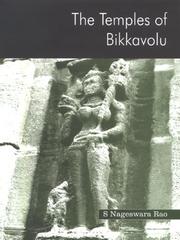
The temples of Bikkavolu

The temples of Bikkavolu

S. Nageswara Rao

ॐTemples of India

Temples of India

Tarun Chopra

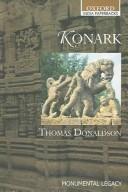
Konark (Monumental Legacy)

Konark (Monumental Legacy)

Thomas Donaldson

ॐThe Śaiva temple of India

The Śaiva temple of India

Cēturāman̲, G. (Professor of fine arts)

ॐRājavallabhavāstuśāstram of Sūtradhāramaṇḍana

Rājavallabhavāstuśāstram of Sūtradhāramaṇḍana

Sūtradhāra Maṇḍana

Expressions in Indian art

Expressions in Indian art

Buddha Rashmi Mani

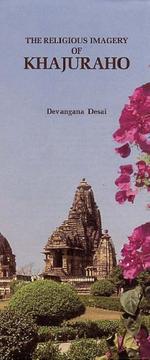
The religious imagery of Khajuraho

The religious imagery of Khajuraho

Devangana Desai

Material culture depicted in Vijayanagara temples

Material culture depicted in Vijayanagara temples

K. Reddeppa

ॐMātrā

Mātrā

Jay Thakkar

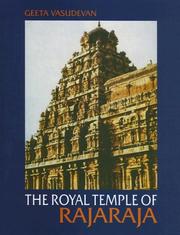
The royal temple of Rajaraja

The royal temple of Rajaraja

Geeta Vasudevan